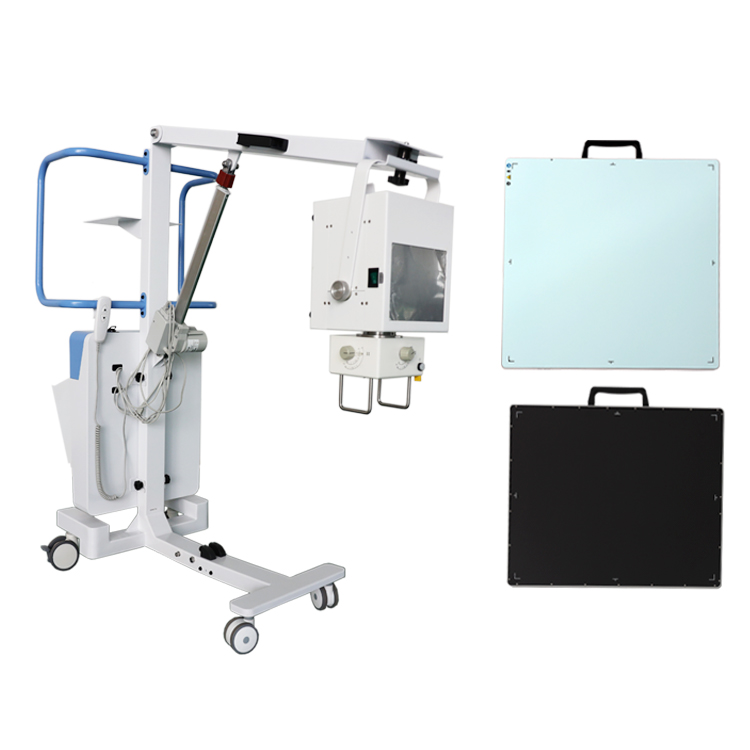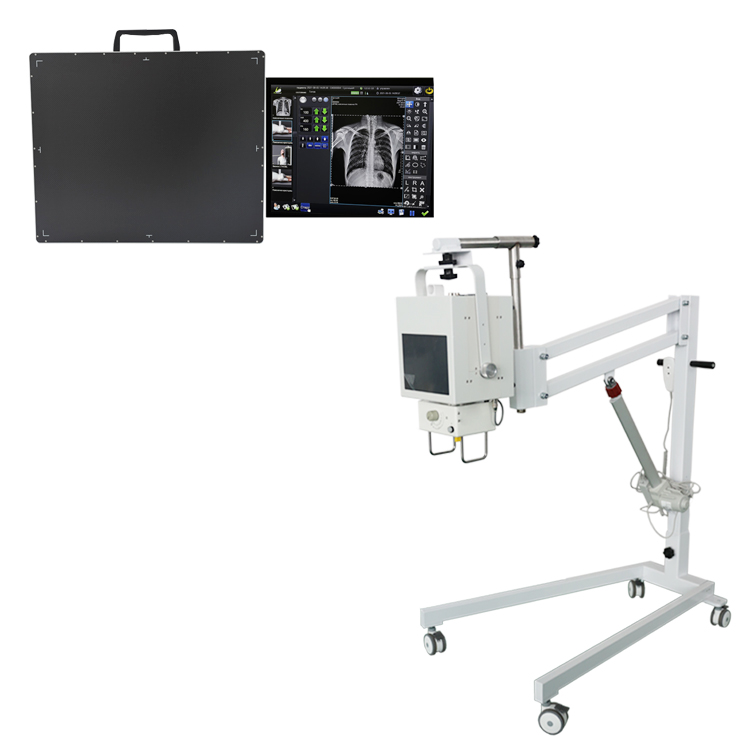
You do not need a lead-lined room to use mobile DR safely in a small clinic. What you do need is a practical three-layer protection setup: distance, shielding, and time—plus a dosimeter to prove you are compliant. For most small clinics, the total investment in protective gear is modest compared to the cost of the DR unit itself, and it is non-negotiable for passing regulatory inspections and keeping staff safe long-term.
If you are equipping a small clinic, urgent care center, or rural health outpost with mobile digital radiography, here is exactly what you need to put in place before the first patient is imaged.
1. Personal Protective Equipment for the Operator
The person pressing the exposure button needs dedicated protection. Scattered radiation from the patient is the primary source of occupational dose during mobile radiography, not the tube itself.
Minimum requirement: A lead apron with 0.25 mm lead equivalent (0.35 mm if your local regulations are stricter). For mobile DR work, a lead collar (thyroid shield) is also strongly recommended because the neck sits close to the patient during positioning assistance.
The often-overlooked item: lead glasses. A Japanese study measuring lens dose during mobile radiography found that radiation protection goggles reduced eye lens exposure by approximately 45%. The same study recorded lens doses up to 0.3 mSv per month among technologists who assisted patients near the X-ray area. If your staff routinely stay in the room during exposure to position elderly or pediatric patients, lead glasses are not optional—they are a basic occupational health measure.
What to buy: At minimum, one set per operator who exposures. If you have two staff members rotating through mobile DR duties, buy two sets. Shared aprons that hang improperly lose protective value over time.
2. Distance: Your Free Protection
Radiation intensity drops with the square of distance. The single most effective thing your operator can do costs nothing: step back.
Research using phantom measurements during mobile radiography showed that when the distance from the X-ray center exceeded 150 cm, the scattered dose dropped to less than 1 μSv. For context, that is a tiny fraction of what you receive from natural background radiation in a day.
Practical rule for small clinics: Mark a line on the floor (or place a small mat) at 2 meters from where the tube will typically be positioned. Train every operator to return to that line immediately after pressing exposure. If the patient needs hands-on support during the exposure (common with uncooperative pediatric patients or severe trauma), the person assisting must be wearing full lead protection and should rotate duties to avoid cumulative exposure to one individual.
Some mobile DR systems now allow wireless remote exposure control, letting the operator step behind a shield or into an adjacent space before firing. If you are still selecting a system, prioritize this feature—it solves the distance problem structurally rather than relying on habit.
3. Patient Shielding (And Why It Matters for Compliance)
Small clinics often skip patient shielding with mobile DR because “the dose is low.” That is a mistake, both clinically and for inspection purposes.
You need a set of patient shields: at minimum, a lead thyroid collar and gonadal shields in adult and pediatric sizes. Use them on every exam where the primary beam does not need to pass through those areas—which is most extremity, chest, and abdominal work.
Why this matters beyond radiation safety: inspectors look for evidence that you are optimizing protection for both staff and patients. A clinic that has a mobile DR but no patient shields signals a casual attitude toward radiation safety, and that can trigger a deeper review of your entire imaging operation.
4. Dosimeter: The Paper Trail That Keeps You Open
Every operator who works with the mobile DR needs a personal dosimeter。Set a simple routine: Dosimeters are stored with the mobile DR unit, not in a drawer in the office. They go on when the machine comes out. They come off when the machine goes back. Send badges for reading on a fixed quarterly schedule and keep the reports in a binder. If an inspector asks, you have the answer ready.
5. Room Considerations for a Small Clinic
Mobile DR is designed for use outside a shielded room—that is the whole point. But “mobile” does not mean “anywhere.”
Minimum room requirements for safe mobile DR use:
Only the patient and necessary personnel in the room during exposure. If the room has other patients (a shared ward, for example), screen them off or move them if possible. The manufacturer documentation for mobile DR systems typically specifies a minimum distance of 1.5 meters from the X-ray source for anyone not directly involved.
A warning sign. A simple “X-ray in use” light or sign at the door is expected in most jurisdictions, even for mobile units.
Controlled direction of the beam. Aim the primary beam toward an exterior wall or an unoccupied space when possible, not toward the waiting room or the reception desk.
You do not need lead-lined walls. You do need to think about who is on the other side of the wall you are shooting toward, especially if it is a shared corridor or a pediatric waiting area.
A Simple Equipment Checklist for Your Purchase Order
When you order your mobile DR, add these line items to the same purchase order. It is easier to budget for them together and ensures nothing gets forgotten:
| Item | Spec / Quantity |
|---|---|
| Lead apron | 0.25 mm Pb eq., 1 per operator |
| Thyroid collar | 0.25 mm Pb eq., attaches to apron or separate |
| Lead glasses | 1 per operator who stays in room |
| Patient shields | Thyroid + gonadal, adult and pediatric |
| Dosimeter badges | 1 per operator, plus badge rack |
| Warning sign | “X-ray in use” door hanger or light |
| Floor marker | Tape or mat at 2 m distance |
Budget note: The protective gear package for a two-operator small clinic typically costs a small fraction of the DR system price. Do not let a sales representative convince you that the low dose of modern DR eliminates the need for basic PPE. The dose is low. The exposure is cumulative. The regulations still apply.
If you are evaluating mobile DR systems and want to confirm which models support remote exposure control and low-scatter configurations for small-clinic layouts, our team can walk you through the specifications that matter for your space—not just the detector specs on the brochure.
Mobile DR X-ray Machine
Hot Line: +86 19015366638
Whatsapp:+86 19015366638
Email: newheekcn@163.com
Company: Weifang Newheek Electronic Tech Co., Ltd.
Add: E Building of Future Star Scientific Innovation Industrial Zone of No.957 Wolong East Street, Yulong Community, Xincheng Sub-District Office, Weifang Hi-tech Zone, Shandong Province, China