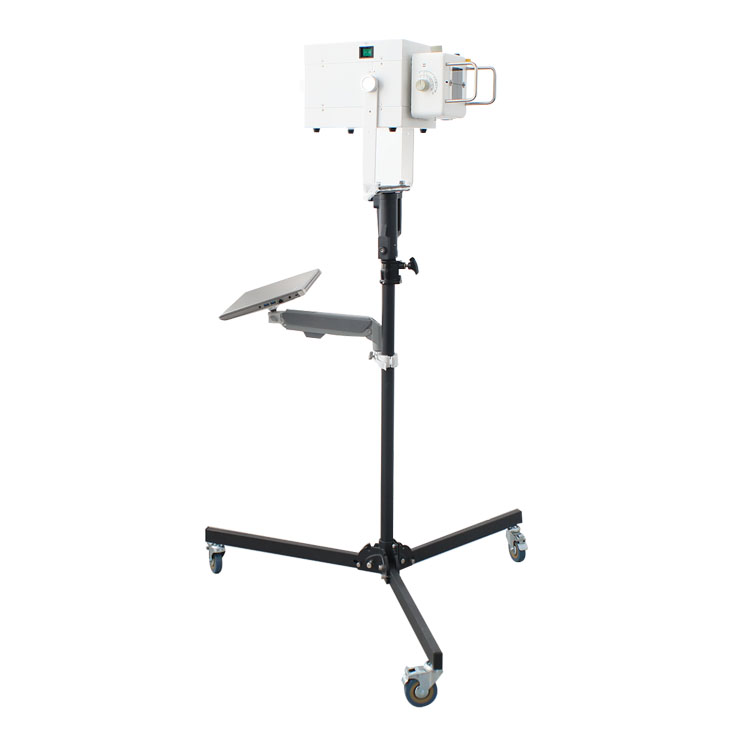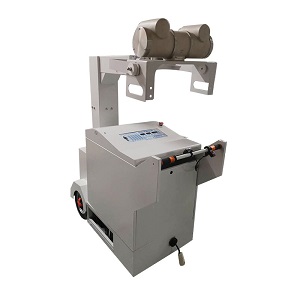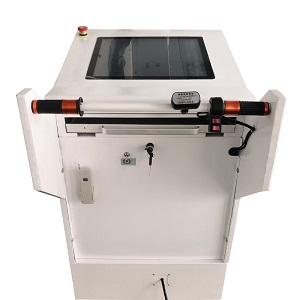
In modern clinical practice, the ability to bring diagnostic imaging directly to the patient has shifted from a convenience to a necessity. A portable DR for bedside examination — a portable digital radiography system built for point-of-care X-ray imaging — lets clinicians capture high-quality radiographs without moving critically ill, immobile, or infectious patients to a fixed radiology suite.
For distributors, importers, and healthcare procurement teams searching for a reliable OEM portable DR manufacturer, understanding the technology, clinical value, and supplier landscape is the first step toward a smart, profitable purchase. This guide walks you through everything that matters.
What Is a Portable DR System for Bedside Examination?
A portable DR (Digital Radiography) system is a mobile X-ray imaging solution built around a flat panel detector (FPD) that converts X-rays directly into a digital image — eliminating film, darkrooms, and chemical processing. Unlike a fixed radiography room, a bedside portable DR is compact, typically battery-powered, and either mounted on a mobile cart or used as a wireless flat panel detector paired with a laptop workstation.
A complete system usually includes:
1. Flat panel detector — the core imaging sensor (amorphous silicon, amorphous selenium, or CMOS)
2. X-ray source — a mobile high-frequency generator, often paired with the detector on a cart
3. Workstation and software — image acquisition, viewing, annotation, and DICOM communication
4. Battery and wireless module — for cord-free bedside operation
5.Mobile stand / cart — for smooth transport between wards and departments
Why Bedside Portable DR Is in High Demand
1. Patient safety and comfort. Critically ill, post-operative, neonatal, and geriatric patients are spared the risk and discomfort of transport to the imaging department.
2. Infection control. In isolation wards and infectious-disease units, bedside imaging significantly reduces the risk of cross-contamination.
3. Faster clinical decisions. Instant digital images at the point of care shorten the path from examination to diagnosis — vital in emergency and ICU settings.
4. Workflow efficiency. One system can serve multiple wards, ICUs, and emergency areas, maximizing equipment utilization.
5. Lower total cost of ownership. No film, no darkroom, fewer retakes thanks to immediate image preview, and minimal infrastructure investment.
Typical Applications of Bedside Digital Radiography
– ICU / CCU — daily bedside chest imaging for ventilated and critically ill patients
– Emergency and trauma — rapid imaging where every minute counts
– Neonatal and pediatric care — low-dose imaging for fragile patients
– Isolation wards — infectious-disease control with minimal patient movement
– Orthopedics and sports medicine — extremity and joint imaging at the point of care
– Long-term care, nursing homes, and home healthcare
– Veterinary and mobile screening units
Key Specifications to Evaluate
| Feature | What to Look For |
| Detector type | a-Si or CMOS FPD; wireless models for maximum flexibility |
| Detector size | 14″×17″ (35×43 cm) standard; 10″×12″ for neonatal imaging |
| Pixel pitch | Approximately 100–140 µm for diagnostic detail |
| Spatial resolution | ≥ 3–4 lp/mm, depending on clinical application |
| Dynamic range / bit depth | 14–16 bit for wide exposure latitude |
| Battery life | Sufficient for a full shift of bedside examinations |
| Connectivity | Wi-Fi, Gigabit Ethernet, DICOM 3.0, PACS/RIS compatible |
| Weight | Lightweight detector (typically 3–6 kg) for easy handling |
| Software | Intuitive acquisition UI, image stitching, annotation, and export |
OEM vs. Buying a Branded System
For B2B buyers, working with an OEM/ODM manufacturer offers clear advantages:
– Your brand — Your logo, your software interface, your market presence.
– Customization — Detector size, software features, language packs, and cart design tailored to local demand.
– Cost efficiency — Factory-direct pricing and flexible minimum order quantities.
– Compliance support — Assistance with market approvals.
– Scalability — A partner who can grow with you from a pilot order to volume supply.
How to Choose the Right OEM Partner
1. Verify certifications. Look for an ISO 13485 quality management system, CE marking under the EU MDR, and FDA clearance where applicable.
2. Assess manufacturing capability. In-house detector production, clean-room assembly, and rigorous QC processes are strong signals of a real manufacturer.
3. Review the product portfolio. A supplier experienced in mobile DR systems, portable X-ray detectors, and bedside imaging understands clinical workflow — not just hardware specs.
4. Ask about after-sales support. Warranty terms, spare-parts availability, remote technical support, and operator training.
5. Request a demo. Hands-on testing of image quality and software workflow tells you more than any datasheet.
6. Check references. Existing OEM clients and a proven market track record are the best proof of reliability.
Our Portable DR Solutions
Newheek is an experienced OEM manufacturer of portable digital radiography systems for bedside examination. Our product line includes wireless flat panel detectors, mobile DR carts, and complete bedside X-ray solutions — all available for private labeling and customization. With flexible OEM terms, we help distributors and healthcare providers worldwide bring diagnostic imaging closer to the patient.
Looking for a trustworthy OEM partner? Contact our team for a quote, datasheet, or live demonstration.
Frequently Asked Questions
Q1: What is the difference between portable DR and mobile DR?
A: “Portable DR” usually refers to a compact digital radiography system that can be carried or moved easily, often built around a wireless detector. “Mobile DR” typically refers to a cart-mounted unit with an integrated X-ray source. Both are designed for bedside and point-of-care imaging, and many suppliers — including us — offer both configurations.
Q2: Can a portable DR system be used for ICU bedside chest imaging?
A: Yes. Bedside chest imaging is one of the most common applications. Look for a system with a large detector (14″×17″), DICOM connectivity, and software optimized for chest imaging.
Q3: What certifications should an OEM portable DR manufacturer hold?
A: At minimum, ISO 13485 for quality management and CE marking (MDR) for the European market. FDA 510(k) clearance is required for the United States, and other regions may have their own regulatory requirements.
Q4: What is the typical MOQ and lead time for OEM orders?
A: This varies by supplier and configuration. Many OEM manufacturers accept small pilot orders, with lead times of a few weeks for standard models and longer for customized systems. Contact us for terms tailored to your market.
Q5: Do portable DR systems integrate with existing PACS?
A: Yes — as long as the system supports DICOM 3.0, it can transmit images to most PACS/RIS platforms. Confirm compatibility with your IT team before ordering.
Take the Next Step
A portable DR for bedside examination is more than a piece of equipment — it is a way to bring faster, safer, more flexible diagnostic imaging to the patient. Choosing the right OEM partner determines image quality, regulatory readiness, and long-term profitability.
Ready to discuss your requirements? Contact us today for a factory-direct quote and discover how our bedside digital radiography solutions can fit your market.
Mobile DR X-ray Machine
Hot Line: +86 19015366638
Whatsapp:+86 19015366638
Email: newheekcn@163.com
Company: Weifang Newheek Electronic Tech Co., Ltd.
Add: E Building of Future Star Scientific Innovation Industrial Zone of No.957 Wolong East Street, Yulong Community, Xincheng Sub-District Office, Weifang Hi-tech Zone, Shandong Province, China